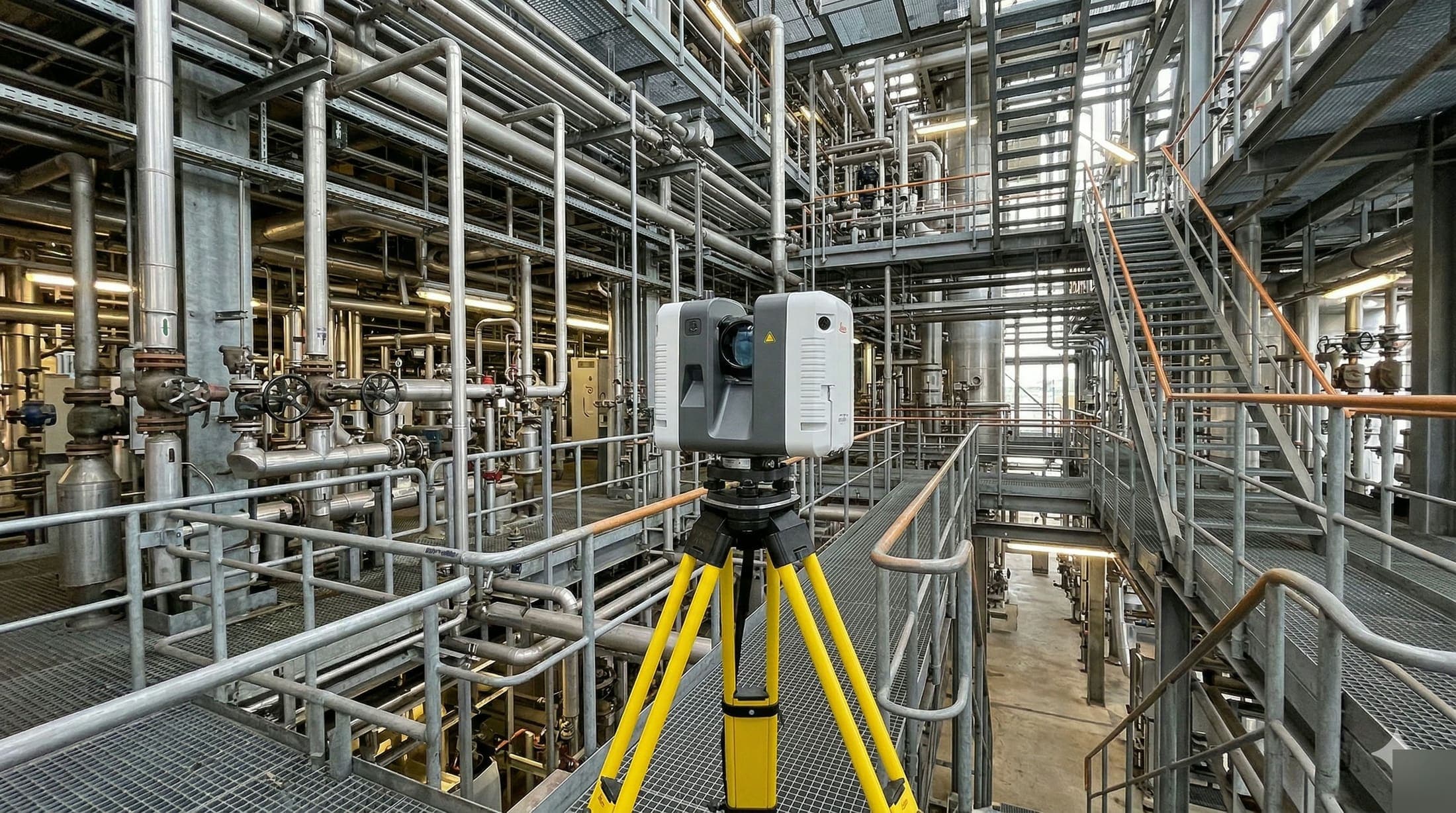
3D Scanning
Industrial 3D laser scanning in the Netherlands, for as-built documentation, renovation and engineering projects
How does 3D laser scanning work?
When renovating, expanding or maintaining industrial installations, current as-built information is essential. Drawings from ten years ago no longer match reality. Manual measurements take days and disrupt production. With 3D laser scanning you capture the entire existing situation in hours, not weeks.
The scanner sweeps the space with a laser beam and records millions of points per second, each with its own X, Y and Z coordinate. Together those points form the point cloud. The result is a detailed, millimeter-accurate 3D representation of your installation, a 3D measurement record you can take dimensions from later.
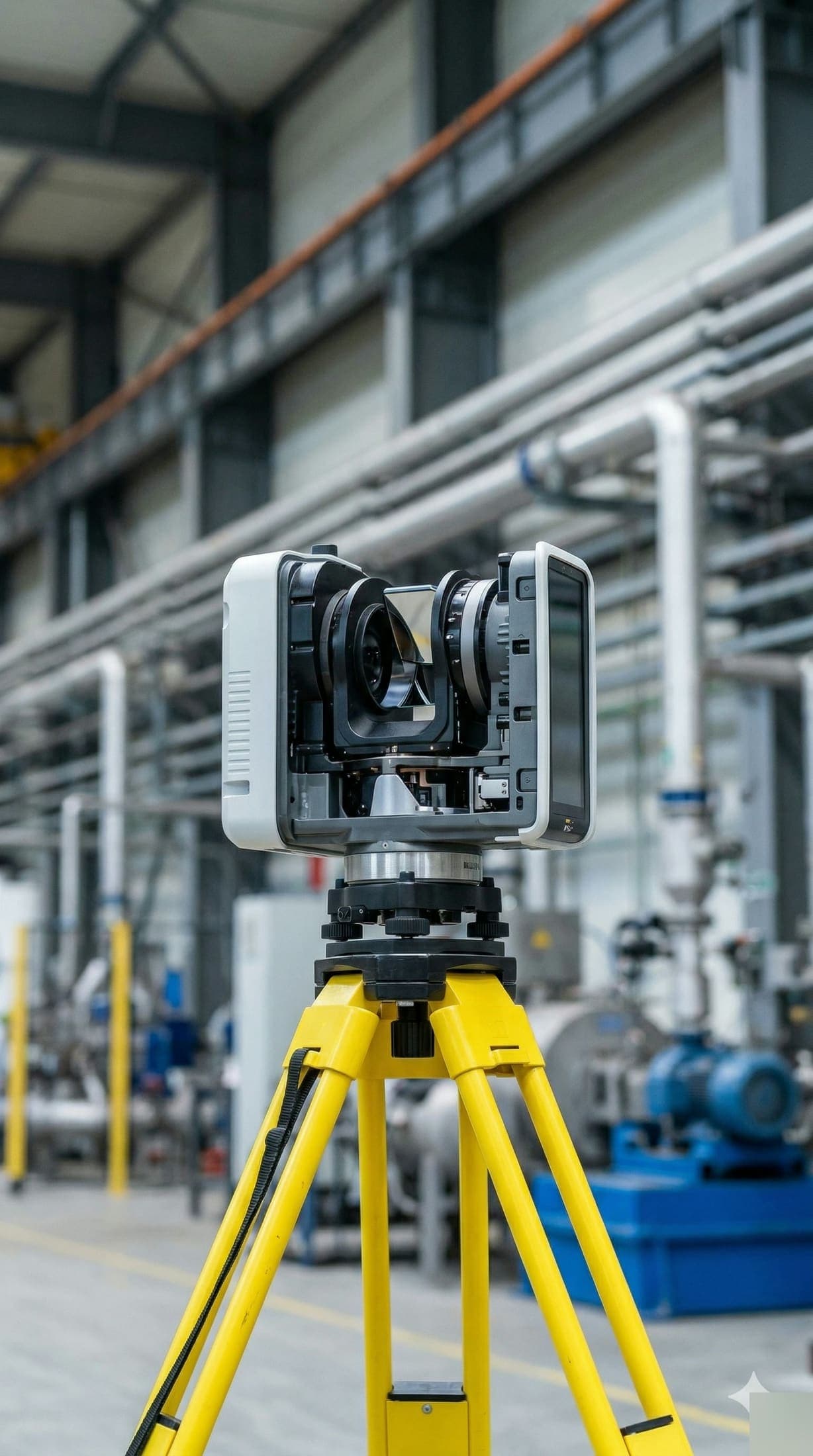
Equipment & software
- NavVis VLX
- Leica measurement equipment
- Cyclone REGISTER 360
- Autodesk ReCap Pro
Point cloud: from scan data to dimensions you can rely on
The point cloud is both the raw result of the scan and your archive. Your engineers measure distances in it, cut sections and check whether new components fit before assembly starts. We deliver the point cloud in E57 or RCP. When a new question about the same installation comes up later, you go back to the same data instead of scanning again.
This data is immediately usable for engineering, clash detection, maintenance and as-built documentation. Your engineers work with reality, not with outdated drawings. On our blog you can read how 3D laser scanning works.
Scan-to-BIM turns the point cloud into a Revit model
If you need more than the point cloud, we model the scan into Revit or Navisworks. That step is called Scan-to-BIM: your engineers then work with objects rather than individual points. We agree the level of detail (LOD) up front, from basic geometry to a fully detailed as-built model.
3D measurement in the Netherlands, without a shutdown
We scan with the NavVis VLX, a mobile 3D scanning system that captures large areas quickly without disrupting production. Combined with Leica measurement equipment for control points, this guarantees millimeter accuracy. We deliver the processed output in the format your engineering team needs: point cloud, CAD model, BIM or 2D drawings.
Those control points tie the scan to the local or national coordinate system. Elevations are referenced to NAP (Normaal Amsterdams Peil, the Dutch national height reference). That is what makes the point cloud line up with your design, with earlier survey data and with scans from later phases. We use the same reference framework as in our dimensional control work, so the scan and the setting out share one coordinate system.
Virtual tour of the scanned installation
Besides the point cloud, we can make the scan accessible online in NavVis IVION. You open the scanned environment in your browser and walk through the installation from your desk, exactly as it stood on the day of the scan. Along the way you inspect the existing situation in detail and measure distances, heights and the clearance between components yourself. That is useful when your engineers are based elsewhere, or when a supplier needs dimensions without anyone having to go on site.
The virtual tour complements the point cloud: the same scan, opened up to everyone on the project team who does not work with CAD software. If you want this, we include it in the survey plan.
Industrial 3D scanning in petrochemical and offshore plants
From petrochemical plants and refineries to offshore modules and power stations. We also work at storage terminals and in the process industry in the Europoort and Botlek. We have experience with 3D scanning in complex, safety-critical environments and we understand the requirements that come with them. We work for clients such as Dura Vermeer and Strabag Züblin, and know the Air Products sites in the Botlek from earlier projects.
What you receive after the 3D scan
Point cloud registration and processing into usable 3D models
As-built documentation in 2D and 3D for renovation and modifications
Clash detection: spot problems before assembly starts
Scan-to-BIM modeling for Revit and Navisworks
Reverse engineering of existing installations and structures
Digital twin as the foundation for maintenance and future projects
Virtual tour in NavVis IVION: navigate and measure in the scan remotely
Frequently asked questions about 3D laser scanning
The most asked questions about 3D Scanning. Question not listed? Feel free to get in touch.
That depends on size and complexity. We scan a 500m² technical room in half a day. A complete process installation can take 2 to 5 days. We align the planning with your project schedule and any turnarounds.
No. The NavVis VLX is a mobile system that does not require shutdown. We scan while production continues, provided safety requirements allow it.
We use mobile scanning, with the NavVis VLX. We carry the system through the installation, so the space is captured on the move and no fixed scan positions are needed. Accuracy is secured with control points.
By default we deliver point clouds in E57 or RCP format. We also process the data into DWG (AutoCAD), RVT (Revit), IFC (open BIM) or 2D drawings. We deliver what your engineering team needs.
With the NavVis VLX combined with Leica control points we achieve an accuracy of 2 to 5mm, depending on conditions. For most industrial applications such as as-built documentation and clash detection, this is more than sufficient.
Yes. We model point clouds into Revit or Navisworks models. The level of detail (LOD) is matched to your project requirements, from basic geometry to fully detailed as-built models. This step is called Scan-to-BIM and is part of our drafting work.
Yes. On request we publish the scan in NavVis IVION. There you navigate through the scanned environment in your browser, inspect the existing situation and take measurements yourself, without going back on site.
Traditional surveying captures individual points. 3D laser scanning captures millions of points per second, producing a complete spatial image. This is faster and more comprehensive.
Yes. We are used to working at locations with high safety requirements, such as petrochemical plants and refineries. We work according to the applicable safety standards and are familiar with VCA-certified work environments (Dutch safety certification, equivalent to SCC).
Costs depend on the size and complexity of the area, the number of scan positions needed and the output you want. A registered point cloud takes the least processing time, a fully detailed BIM model at a high LOD the most. We go through what you need at intake. You receive a quote up front and we record the scope in the survey plan afterwards.
Yes. When there is no reliable drawing left, the scan itself becomes the source. We capture the part in the point cloud and model it back into a 3D model from there. That is called reverse engineering, and on renovation and modification work it is often the fastest route to a drawing you can build on.
“We are very satisfied with the dimensional control service across various projects. From the very first contact, communication has run smoothly.”
“Michael had everything worked out the day before and was able to come the very next day. Delivers good work and is professional. We are very satisfied.”
“The dimensional control service was excellent. The team delivered accurate and timely results, which kept the project running smoothly.”
Services that often go with 3D scanning
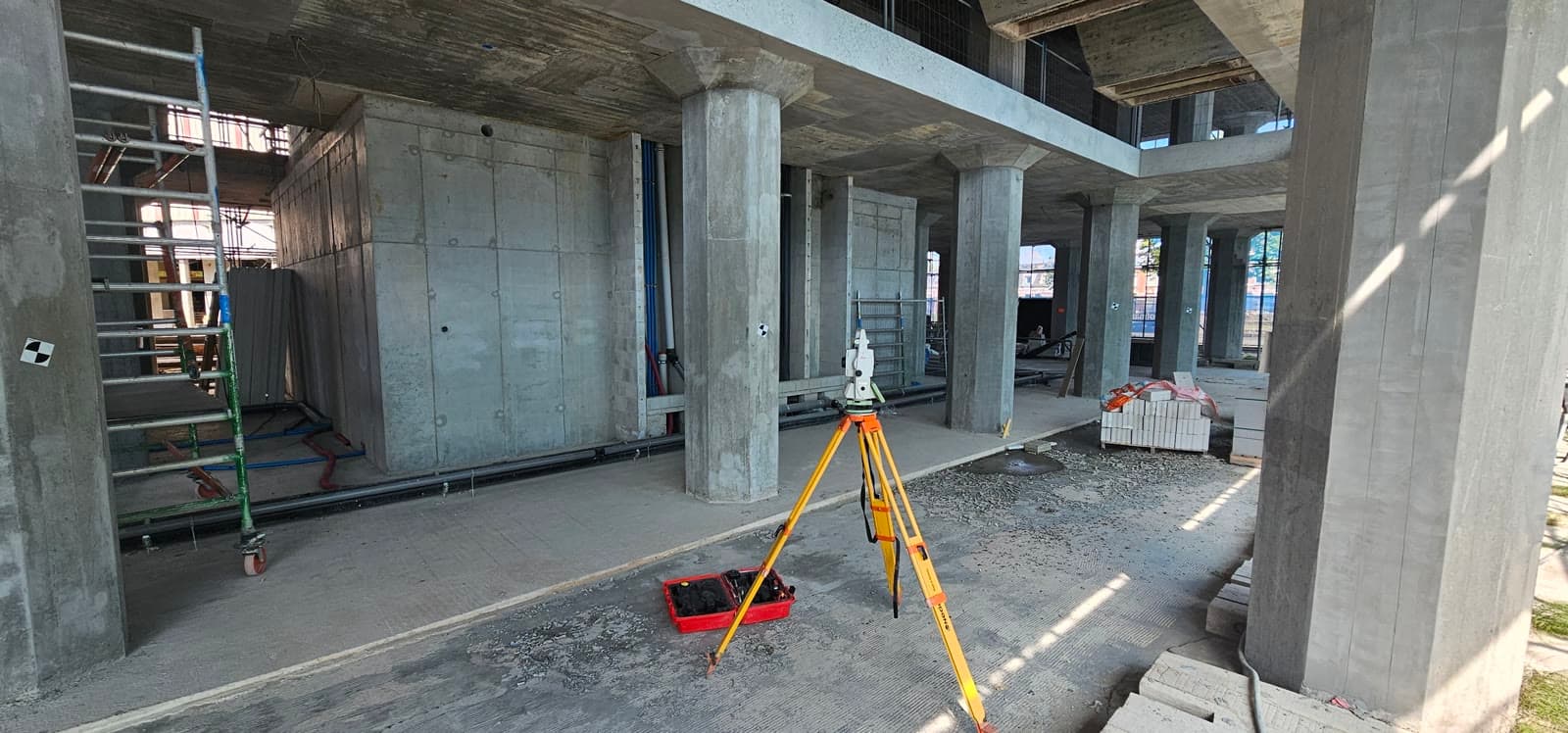
Dimensional Control
Have reference points set out so your contractor can start tomorrow. Aligned with your planning, accurate to the millimeter.
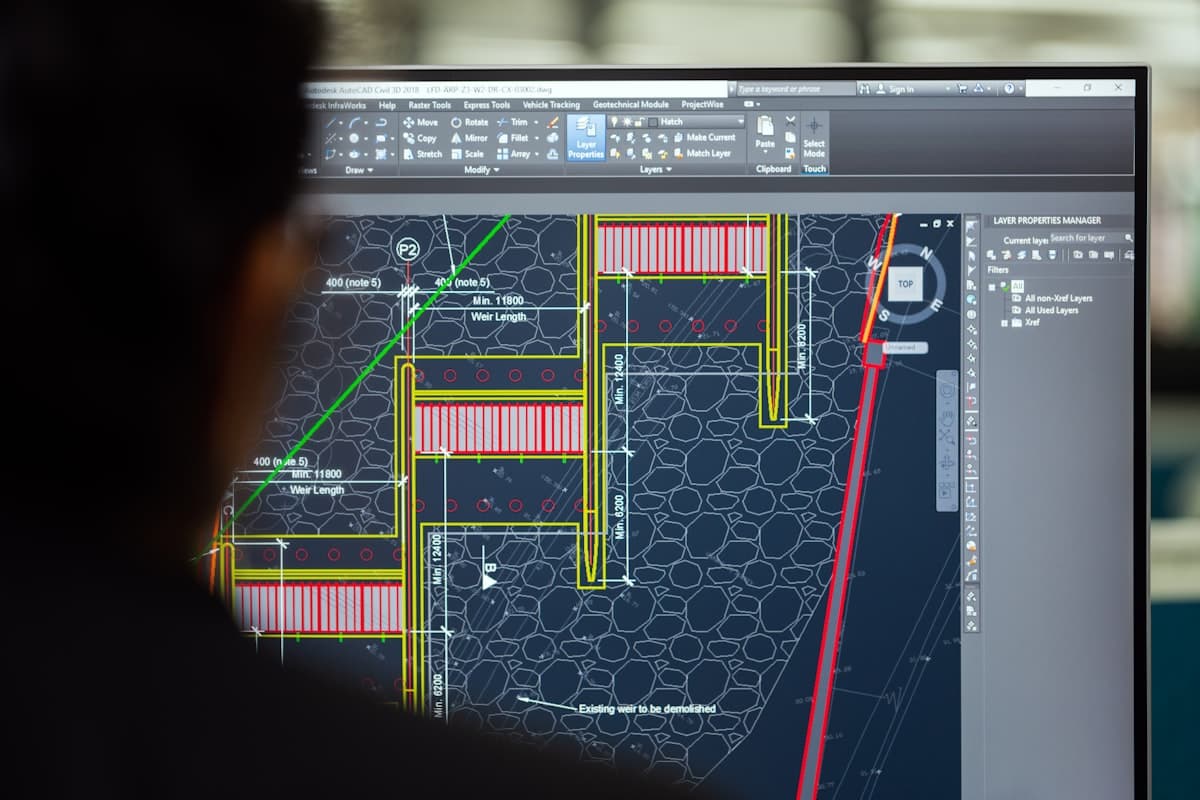
Drafting / CAD
Turn raw measurement data into usable drawings and 3D models. Receive your files in DWG, IFC or RVT, ready for engineering.
24/7 Monitoring
Keep watch over your project day and night without anyone on site. Immediate alerts on deviations, continuous insight into movement.
Request a quote for 3D Scanning
Answer three short questions and leave your details. You usually get a response within 24 hours, on business days.
No-obligation advice on the approach for your project. Usually a response within 24 hours.