When is GNSS surveying the fastest method?
On large-scale measurements in open terrain, GNSS (GPS) is the fastest and most efficient survey method. Satellite signals combined with RTK corrections deliver centimeter-accurate positions, without requiring a clear line of sight between measurement points.
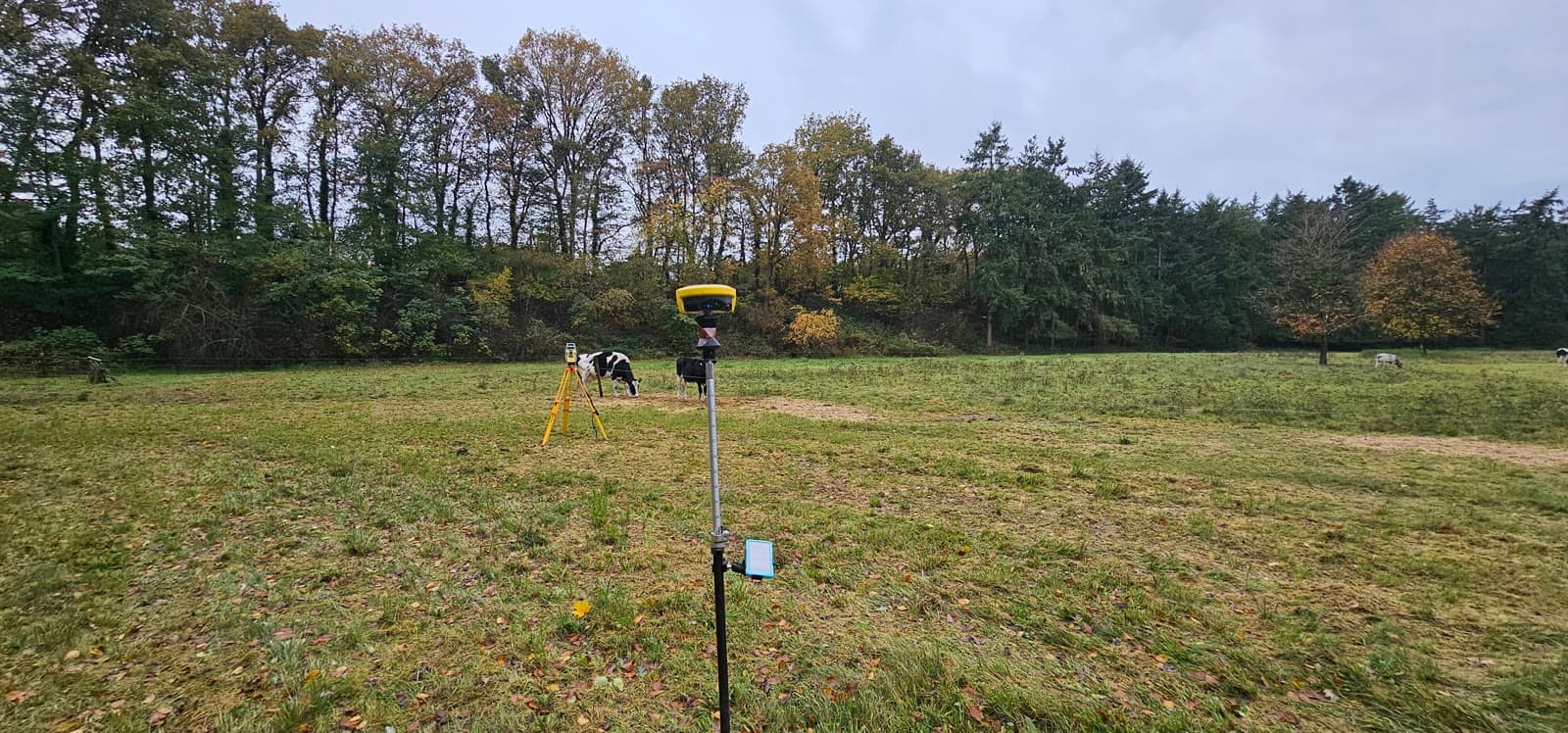
Equipment & software
- Leica GS18
- GNSS RTK receiver
- 06-GPS network
GPS land surveying for infrastructure and roads
We deploy GNSS for terrain surveys, setting out construction projects, cable routes and road projects. The technology is particularly suited to situations with long distances or where speed is critical.
How accurate is a GPS survey?
With RTK corrections we measure to 1 to 2 centimeters horizontally and 2 to 3 centimeters vertically. For terrain surveys, earthworks and setting out roads and cable routes, that is more than enough. When your work calls for millimeters we bring in a total station, or combine both methods on the same project. Reference points that will be reused later we measure statically with post-processing, which brings sub-centimeter accuracy within reach.
RTK corrections from a national reference network
Through the 06-GPS network we receive real-time corrections (NRTK) for immediate centimeter precision. For the highest accuracy we perform static measurements with post-processing.
From GPS survey data to a digital terrain model
After the field survey we check the raw data and process it into the file you actually work with: a coordinate list, a situation drawing or a digital terrain model. We agree on the final product up front. If you want the survey worked out into complete drawings, our drafting team picks that up.
What you receive after a GPS survey
RTK measurements with centimeter precision
NRTK through the 06-GPS network
Static measurements for reference points
Post-processing for maximum accuracy
Frequently asked questions about GPS surveying
The most asked questions about GPS Surveying. Question not listed? Feel free to get in touch.
With RTK corrections we typically achieve 1 to 2 centimeters horizontally and 2 to 3 centimeters vertically. With static measurements and post-processing, sub-centimeter accuracy is possible.
No, GNSS requires a clear view of the sky. In buildings, tunnels or densely wooded terrain we use a total station. We often combine both methods on the same project.
GPS works through satellites and is fast over long distances, but requires a clear view of the sky. A total station works with a laser beam and is more accurate (millimeter level), but requires lines of sight between points. We advise which method best suits your project.
Yes, GNSS works in rain, cloud cover and wind. Only severe atmospheric disturbances or very dense canopy can limit accuracy. In practice this is rarely an issue.
“We are very satisfied with the dimensional control service across various projects. From the very first contact, communication has run smoothly.”
“Michael had everything worked out the day before and was able to come the very next day. Delivers good work and is professional. We are very satisfied.”
“The dimensional control service was excellent. The team delivered accurate and timely results, which kept the project running smoothly.”
Services that often go with GPS surveying
Land Surveying
Lay the geodetic foundation for your project. From site survey and topography to setting out, so your construction team can get started immediately.
As-built Verification
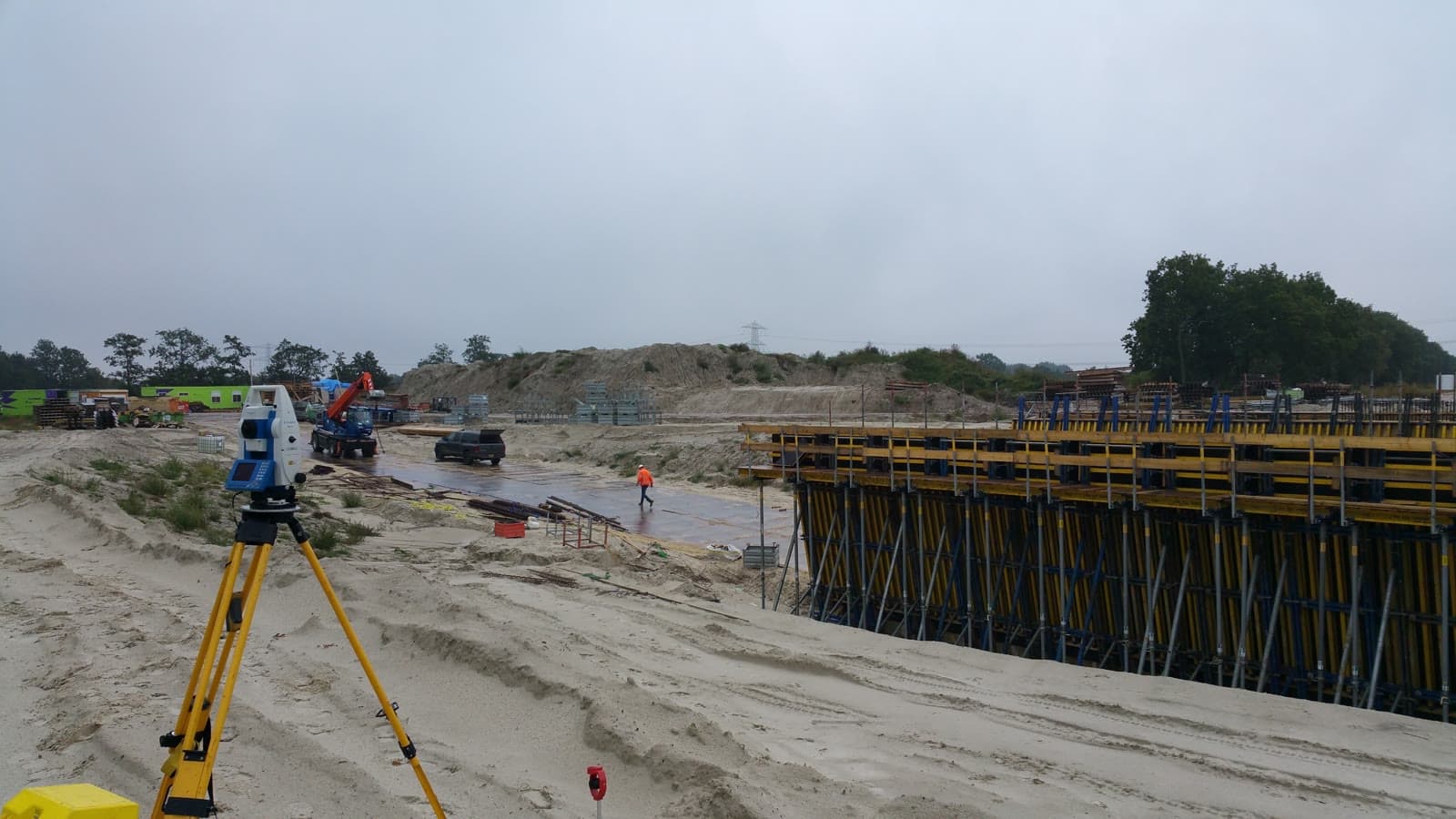
Verify that everything is where it should be. As-built measurements make deviations immediately visible so you can adjust in time.
Precision Leveling
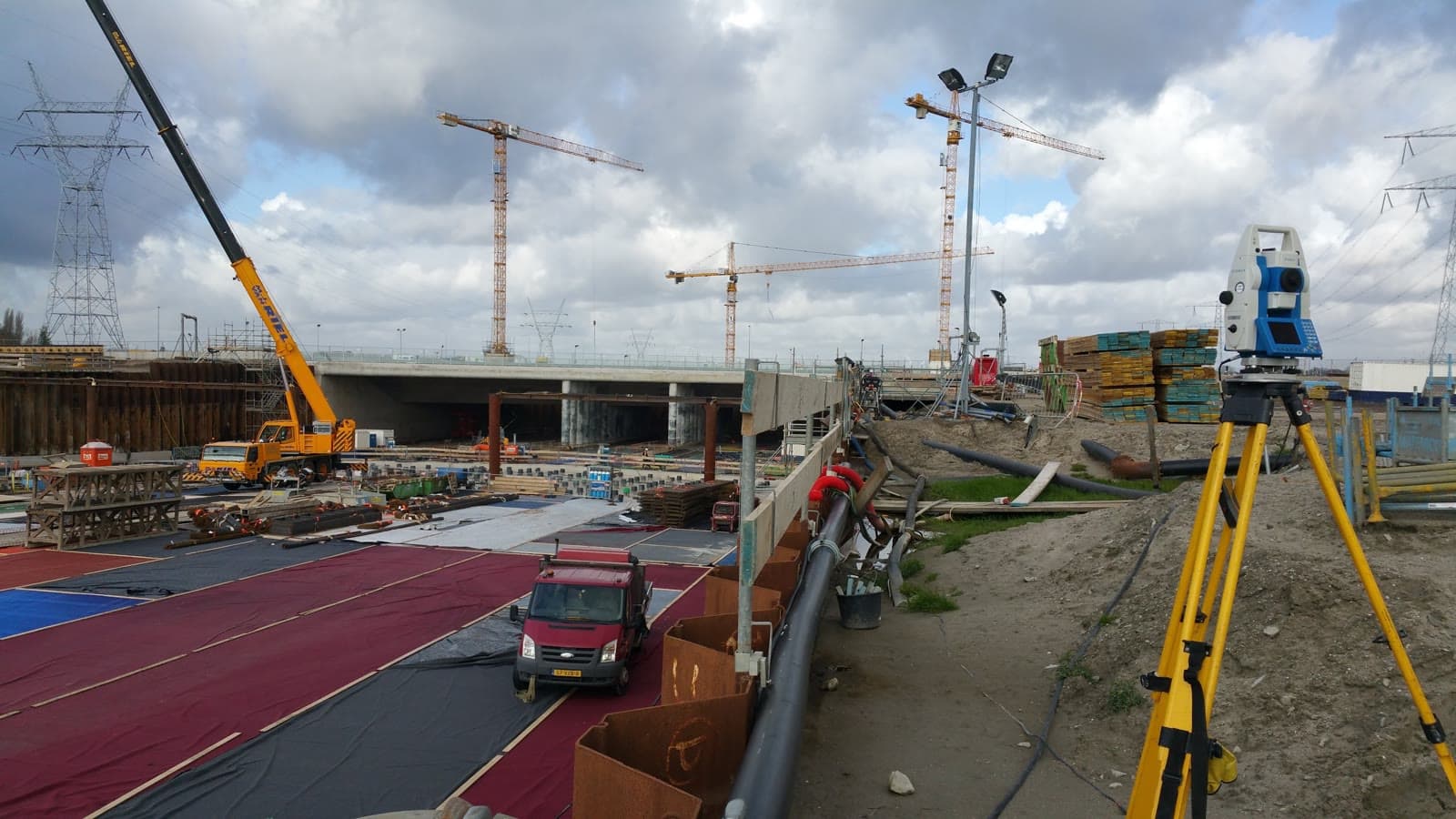
Get reliable elevation data accurate to a tenth of a millimeter. For foundations, floors and structural calculations, referenced to NAP.
Request a quote for GPS Surveying
Answer three short questions and leave your details. You usually get a response within 24 hours, on business days.
No-obligation advice on the approach for your project. Usually a response within 24 hours.